
An orderly closet can fail during one shared morning, then disappear beneath clean laundry that has nowhere easy to go. For a hypothetical family sharing limited space, the safest decision is to test ownership zones, clothing capacity, and return routines before buying hardware that may solve the wrong problem.
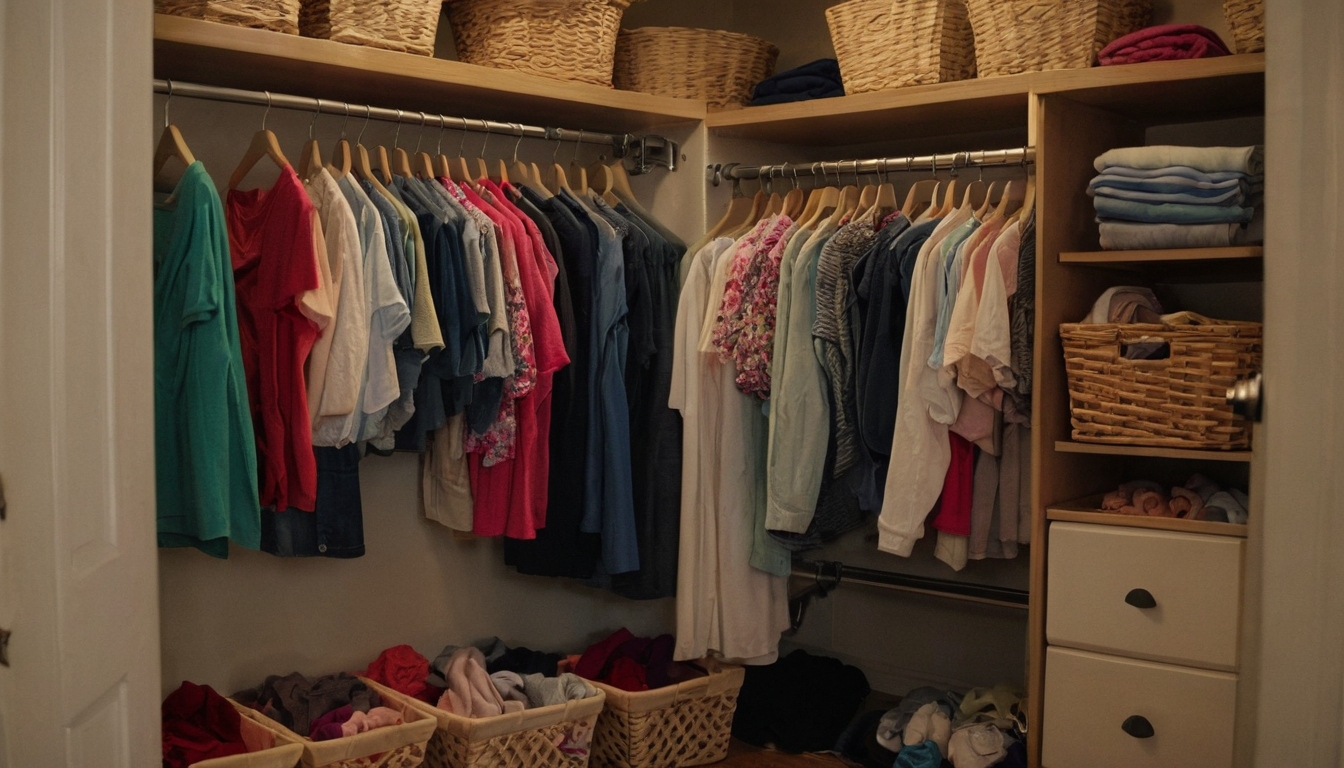
Closet Organization That Survives Shared Mornings, Laundry Days, and Changing Seasons shown as an editorial planning reference.
How should a household plan closet organization before buying a closet system?
Effective closet organization begins with an inventory and workflow audit, not a product catalog. Record who uses the closet, what each person hangs or folds, when access overlaps, how laundry returns, and which seasonal items can live elsewhere.
A closet inventory should measure volume, ownership, and frequency of use
- List each user, mobility needs, access times, laundry frequency, and alternative storage.
- Count long-hang, short-hang, folded, drawer, shoe, accessory, formal, religious or occasion-specific, and seasonal items separately.
- Measure hanging clothes by rod width and folded clothes, shoes, and bins by their actual footprints.
- Mark daily, weekly, occasional, and off-season categories so frequent-use space remains convenient.
Representative planning ranges include adult hangers around 16 to 18 inches wide, children’s hangers around 12 to 14 inches, and hanging depth near 22 to 24 inches. Folded garments often fit shelves 12 to 16 inches deep, but actual belongings and product specifications should determine the final layout.
Keep care labels accessible during sorting. For covered garments, the Federal Trade Commission’s Care Labeling Rule guidance says required labels must remain attached and legible throughout the product’s useful life.
Closet measurements must account for doors, trim, ventilation, and usable depth
Measure interior width, depth, and height at several points. Map door swing, trim, outlets, vents, access panels, sloped ceilings, and wall projections. Test drawer extension and garment clearance with doors open. Once the shell is understood, ownership can be divided without blocking shared access.
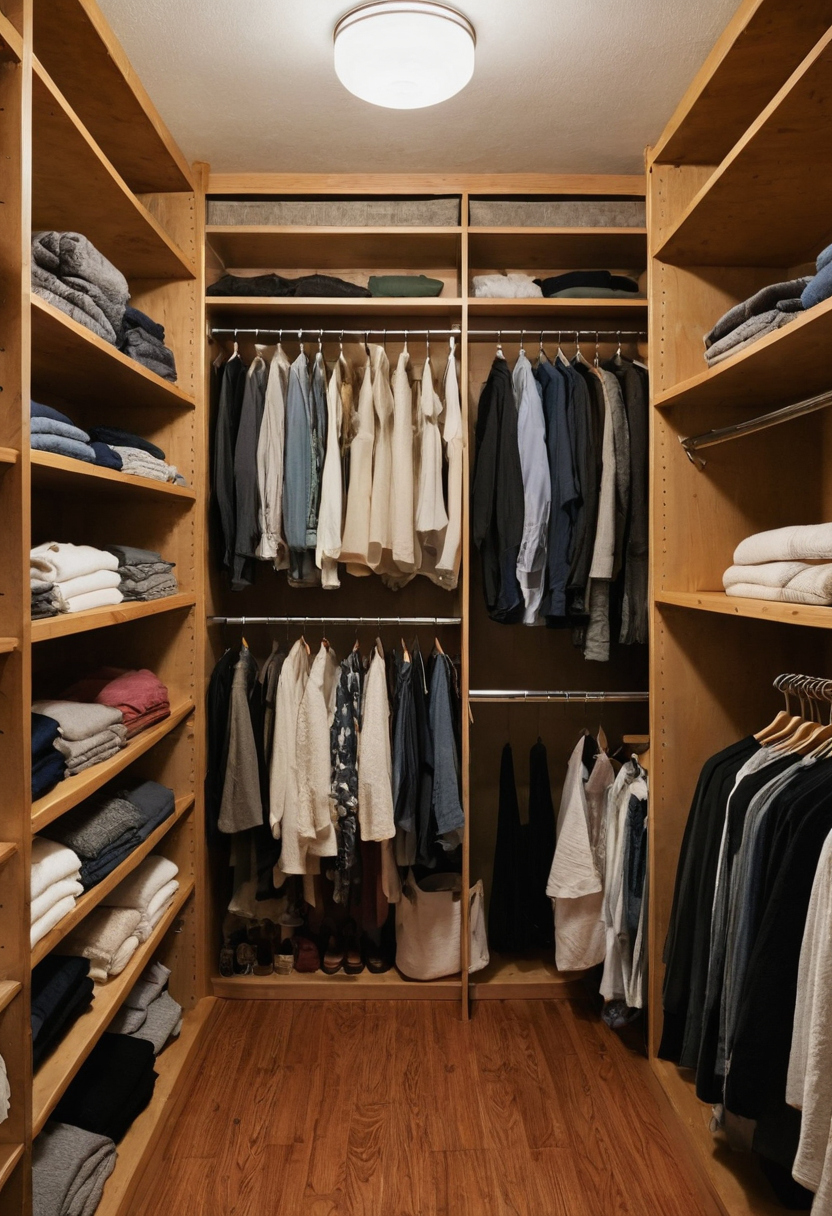
How should a household plan closet organization before buying a closet system shown with practical context cues.
Shared closet organization should separate ownership while protecting common access
A shared closet works best when every person has a defined everyday zone that can be reached without crossing another user’s path.
Morning traffic determines where each user’s daily clothing belongs
Simultaneous users generally need separate left-right zones, while staggered users may share category zones. Division should follow garment volume, schedule, reach, and laundry responsibility rather than equal width.
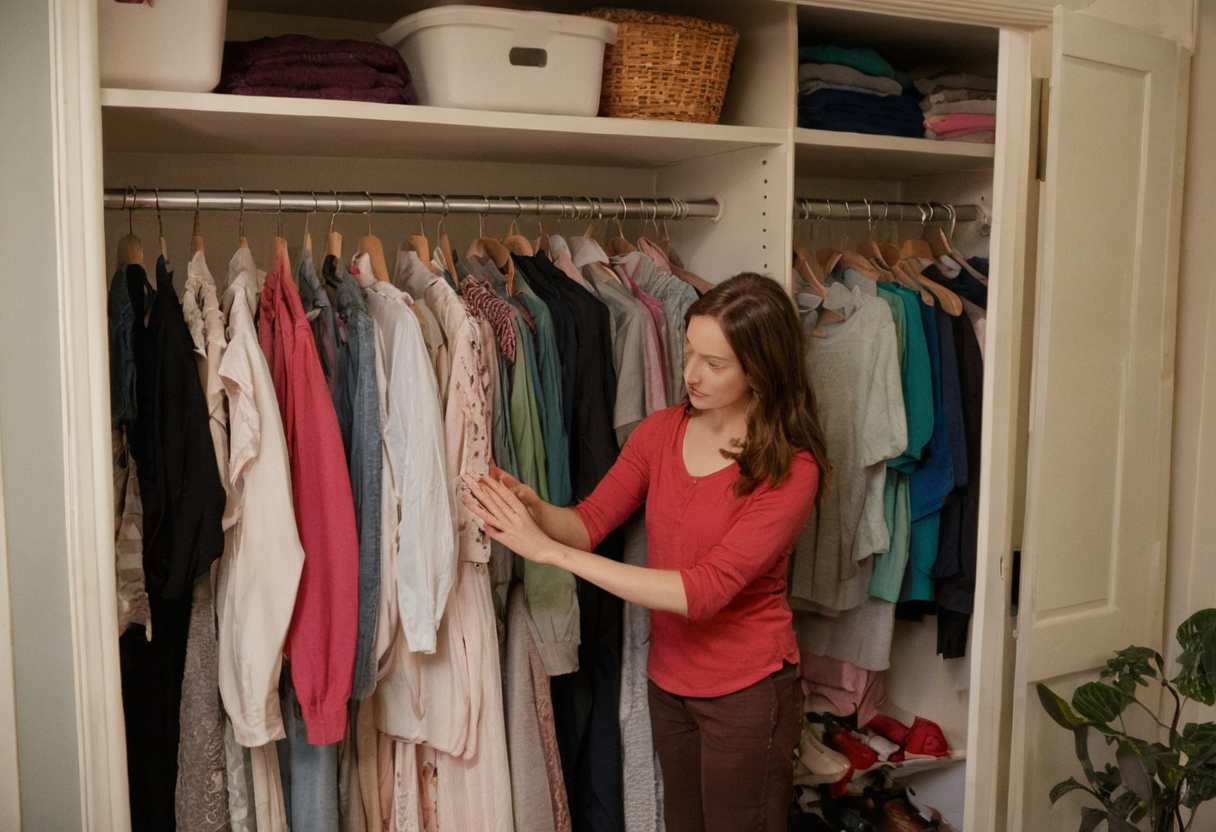
Shared closet organization should separate ownership while protecting common access shown as an editorial planning reference.
| Users | Division rule | High-frequency zone | Shared zone | Conflict to test |
|---|---|---|---|---|
| Two adults | Volume and schedule | Earlier dresser near entrance | Linens or luggage | Crossing drawers |
| Two children | Reach and ownership | Daily clothes low | School or sports gear | Mixed laundry |
| Adult and child | Adult upper, child lower | Separate reachable sections | Seasonal bin | Blocked access |
The U.S. Access Board guidance places unobstructed accessible reaches at 15 to 48 inches when required clear floor space and approach conditions are met. For an obstructed side reach over an obstruction more than 10 but no more than 24 inches deep, the maximum high reach is 46 inches. ADA requirements do not automatically govern every private closet, but the ranges can guide planning for seated users or limited mobility.
Shared items need a neutral zone with an explicit owner for upkeep
Use removable labels or colored shelf clips to identify personal zones. Assign responsibility for shared linens, formalwear, hampers, donation bags, and seasonal containers. Dry damp clothing outside the closet. The EPA cautions that mold-damaged porous materials may require disposal when complete, safe cleaning is not possible.
How much hanging space, closet shelving, and drawer storage does each clothing category require?
The right storage mix follows measured garment dimensions and care needs. Short clothing can use stacked rods, dresses and coats require uninterrupted drop space, knitwear benefits from supported folding, and small accessories need divided containment.
- Adult shirts and folded trousers: Double-hang rods with roughly 38 to 42 inches of drop.
- Dresses and coats: Long-hang storage with roughly 50 to 65 inches of drop.
- Children’s clothing: A reachable rod or shelf, often with 25 to 35 inches of hanging drop.
- Sweaters, jeans, and bags: Closet shelving commonly 12 to 16 inches deep.
- Socks and accessories: A drawer organizer fitted to usable interior dimensions.
Double-hang, long-hang, and shelf zones should follow the measured wardrobe
Hypothetical allocation: Thirty shirts occupying 1 to 1.5 inches each require about 30 to 45 linear inches of rod. Eight bulky jackets may need another 16 to 24 inches. These are planning estimates, not universal dimensions, so measure garments on their actual hangers.
A drawer organizer should match both drawer dimensions and laundry habits
Measure internal width, depth, height, and hardware clearance. Dividers can control socks, undergarments, accessories, and vertically folded children’s clothes, but tiny compartments create extra folding work. Choose washable or wipeable materials that suit the household’s upkeep routine.
Adjustable closet shelving reduces the cost of changing storage needs
Movable shelves and rods can accommodate growing children, wardrobe changes, and repurposed rooms. Confirm adjustment increments, compatible replacement parts, warranty conditions, and load limits. For newly finished components that emit odors, follow label precautions and increase ventilation as the EPA recommends.
Closet organization must include a simple laundry-return and seasonal-rotation workflow
A closet stays organized only when clean clothing can return without extra sorting and off-season items have a defined destination.
The laundry return path should end at an immediately available storage location
For the hypothetical household, clothing left in baskets indicates a storage bottleneck. Test the return path in order:
- Sort clean clothing by owner.
- Hang garments while empty hangers remain accessible.
- Fold items directly into open drawers, bins, or shelves.
- Move repairs into one labeled container.
- Route donations and outgrown clothing out of the closet.
Keep folded stacks low enough to remove a bottom garment without collapsing the pile. Each person should be able to return clothing without moving somebody else’s belongings.
Seasonal storage should preserve garments without hiding active clothing
Clean and fully dry garments before storage. Use breathable garment bags for formalwear, wool, leather, and delicate fabrics. Sealed bins suit dry, washable folded clothing in moisture-controlled locations. Avoid compressing structured garments, and treat cedar as a supplement to cleaning and inspection rather than complete pest protection.
Review fit, repairs, and donations during weather changes, school transitions, and children’s growth spurts. The same principle supports planning storage around weekly routines and seasonal overflow: recurring household movement should determine the layout.
Which closet system offers the best balance of cost, durability, and adjustability?
No closet system type is universally best. Wire offers ventilation and a lower entry cost, laminate provides flat surfaces and a built-in appearance, modular components support later changes, and custom cabinetry maximizes fit at a higher commitment.
A closet system comparison should use total installed cost rather than package price
Compare quotes for identical dimensions, rods, shelves, drawers, and accessories. Separate materials, design, delivery, demolition, wall repair, anchoring, installation, taxes, and promotions. Package prices often exclude the drawers and hardware that make daily use practical.
Renters and short-term owners should prioritize reversible closet components
Renters should request approval for fasteners, wall penetrations, and patching. Portable racks, removable bins, and reusable drawer inserts can outlast one address. Permanent cabinetry is easier to justify when long ownership and exact fit outweigh future adjustment costs.
Closet shelving and storage furniture must be installed for their rated loads and wall conditions
Safe installation requires fasteners, supports, spans, and anchoring that match both the wall construction and the expected load.
Freestanding clothing-storage units require an anti-tip assessment
- Determine whether a dresser, wardrobe, or drawer tower falls under 16 CFR Part 1261, the federal safety standard for covered clothing-storage units that incorporates ASTM F2057-23. The regulation does not automatically apply to wall-mounted rods or shelving.
- Install the manufacturer-specified restraint, particularly where children might open drawers or climb.
- Use a qualified installer when wall construction is unknown or the anchoring instructions cannot be followed.
Shelf and rod capacity depends on span, support spacing, and load distribution
- Confirm whether a rating applies per shelf, bracket, span, or wall section.
- Check whether the stated capacity assumes an evenly distributed load.
- Verify support spacing before storing luggage, dense clothing, or loaded bins.
- Stop work if drywall is damaged, moisture-stained, crumbling, or detached from framing.
Storage should also preserve access to garment care information. For products covered by its rule, the FTC explains that care instructions must warn against a reasonably expected procedure that would harm the product.
A staged closet reset tests the organization plan before permanent upgrades
Households can reduce purchasing mistakes by testing zones with existing hangers, boxes, removable labels, and temporary dividers before installing permanent cabinetry. A two- to four-week trial should include ordinary mornings, a complete laundry cycle, and predictable shared-use conflicts.
A closet trial should be evaluated after mornings and laundry days
Keep one note near the closet and record problems when they occur. At the end of the trial, review:
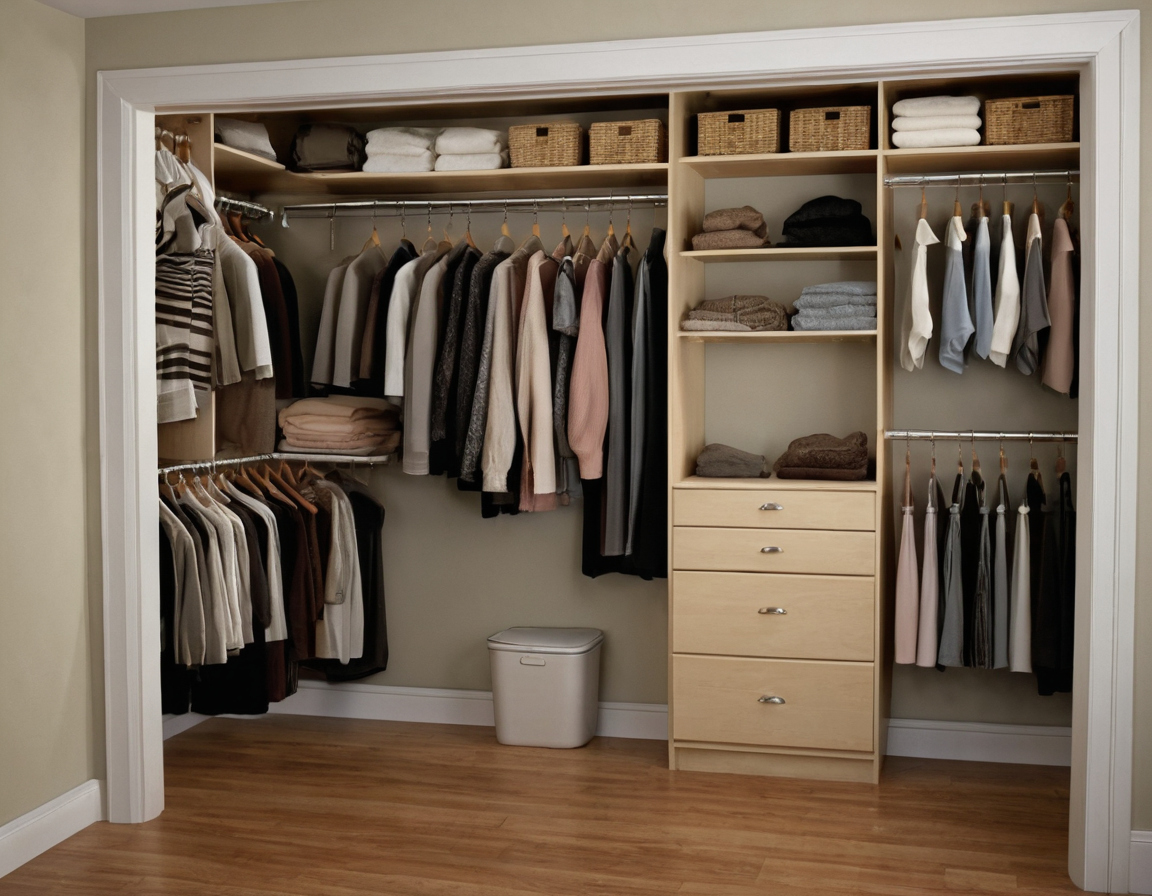
A staged closet reset tests the organization plan before permanent upgrades shown with practical context cues.
- Clothing that took too long to find
- Doors, drawers, or users that blocked access
- Clean laundry left outside the closet
- Ownership confusion
- Overfilled categories beside unused capacity
- Seasonal items crowding active clothing
Damp clothing should never enter the return routine. The EPA moisture guide recommends drying wet or damp materials within 24 to 48 hours while correcting the moisture source.
Closet upgrades should proceed from reversible fixes to permanent work
- No cost: Reassign zones, reduce excess, standardize folding, and relocate seasonal clothing.
- Low cost: Add labels, matching hangers, bins, dividers, or a drawer organizer.
- Adjustable: Add movable closet shelving, rods, or modular components after checking dimensions and load ratings.
- Permanent: Consider cabinetry or structural improvements only after the tested layout succeeds.
The household should choose each purchase by expected life, reusability, replacement-part access, warranty terms, and installation commitment. Successful closet organization produces fewer unfinished clothing tasks, not merely a polished display.
Frequently asked questions about closet organization
What is the rule of three for cleaning or decluttering a shared closet?
A practical rule is to sort items into keep, relocate, and release categories. Shared users should decide separately about personal belongings and assign one deadline for donations or repairs so temporary piles do not become permanent storage.
What common closet organization mistakes make shared mornings and laundry return harder?
Common mistakes include dividing space equally despite unequal wardrobes, placing daily clothing outside comfortable reach, allowing drawers to block walkways, filling every shelf, and buying containers before measuring what they must hold.
How can a household organize a closet with shelves without buying a full closet system?
Reassign shelves by owner and frequency, limit folded stack heights, add labeled bins, and reserve one shelf for shared items. Freestanding dividers and shelf inserts can create useful categories without permanent installation.