If a weekly grocery trip fills every shelf before the bags are unpacked, the pantry cabinet decision is bigger than door style. The real question is how much visible, reachable space the kitchen needs for normal groceries, holiday overflow, and snacks children can access without creating a jumble.
Cabinets for pantry storage should be planned around shopping rhythm, not just cabinet style
Cabinets for pantry storage work best when capacity is planned around food movement: what enters each week, what enters before holidays, what children reach for, and what adults need near the cooking zone. Color, door profile, and decorative bins should come after that operating plan.
What pantry load should a weekly grocery household plan for?
A household of three to five people that shops once a week, with one smaller midweek fill-in trip, should plan separate room for cans, jars, cereal, pasta, rice, baking supplies, lunch items, snacks, bulk goods, paper goods, and a few small appliances or serving pieces.
The simplest test is to measure the pantry already in use. Count the shelf feet holding food on an ordinary day, then count the groceries that end up on the floor, counter, garage shelf, or dining chair after a large shop. If two grocery bags always wait outside the cabinet, the next pantry needs more than matching containers.
- Weekly groceries: cans, sauces, grains, cereal, breakfast food, school-lunch supplies, and dinner backups.
- Cooking staples: oils, vinegars, spices, pasta, rice, broth, and baking basics.
- Kid-access food: approved snacks, crackers, bars, and lunch add-ins placed low enough for safe reach.
- Bulk and holiday overflow: warehouse packages, paper goods, drinks, extra baking ingredients, canned goods, and packaged treats.
A durable pantry plan usually needs one extra shelf or about 15 to 25 percent open capacity for seasonal food and hosting. That space has to be visible. If overflow only fits by stacking bags in front of cans, duplicate buying starts quickly.
Lighting and finishes belong in the same decision. If the pantry cabinet interior needs lighting, ENERGY STAR says qualified LED lighting uses at least 75 percent less energy and lasts up to 25 times longer than incandescent lighting. If cabinets, paint, adhesives, or shelf liners are part of the project, the U.S. Environmental Protection Agency notes that concentrations of many volatile organic compounds are consistently higher indoors than outdoors, so ventilation and low-odor product choices matter.
Why do beautiful pantry cabinets fail after the first big restock?
Beautiful pantry cabinets fail when the design solves the photo and not the routine. Deep fixed shelves hide the second jar of marinara behind cereal boxes. A container system that fits only one brand size fails when bulk bags, odd packages, and extra baking supplies arrive.
- List the foods that enter the house weekly, then list the foods that enter before holidays, hosting, or school breaks.
- Assign low shelves to children’s snacks and heavy items, middle shelves to daily cooking, and high shelves to lightweight backstock.
- Reserve visible overflow space before choosing baskets or matching containers.
- Check that pullouts and adjustable shelves match the weight of cans, jars, appliances, and bulk bags.
What cabinet depth and shelf spacing work for cans, boxes, jars, and small appliances?
Pantry cabinets for kitchen use need different depths for different jobs: shallow shelves keep cans and spices visible, medium shelves handle most groceries, and deep cabinets need pullouts, drawers, or bins to prevent buried food.
Which pantry cabinet depths keep food visible instead of buried?
Shallow pantry storage, about 6 to 10 inches deep, suits spice jars, tuna cans, soup cans, tea boxes, extracts, and short condiment bottles. The back row stays visible without moving the front row.
Medium pantry shelves, about 12 to 16 inches deep, are the safest default for fixed shelves. This depth fits pasta boxes, cereal, nut butter, rice canisters, baking supplies, snack bins, jars, and unopened crackers while still allowing most adults to see and reach the back.
Deep pantry cabinets, about 18 to 24 inches, work better for bulky or occasional items: stand mixers, slow cookers, bulk flour, paper goods, holiday ingredients, serving trays, and backstock. A 24-inch-deep tall pantry can hold a lot, but fixed shelves at that depth often become hiding places unless the cabinet has pullouts or labeled bins.
Stock tall pantry cabinets commonly come in widths such as 18, 24, 30, and 36 inches, with heights around 84, 90, or 96 inches and depths near 12 or 24 inches. Semi-custom cabinetry adds more options, while custom cabinetry can fit an odd alcove or full-height wall run.
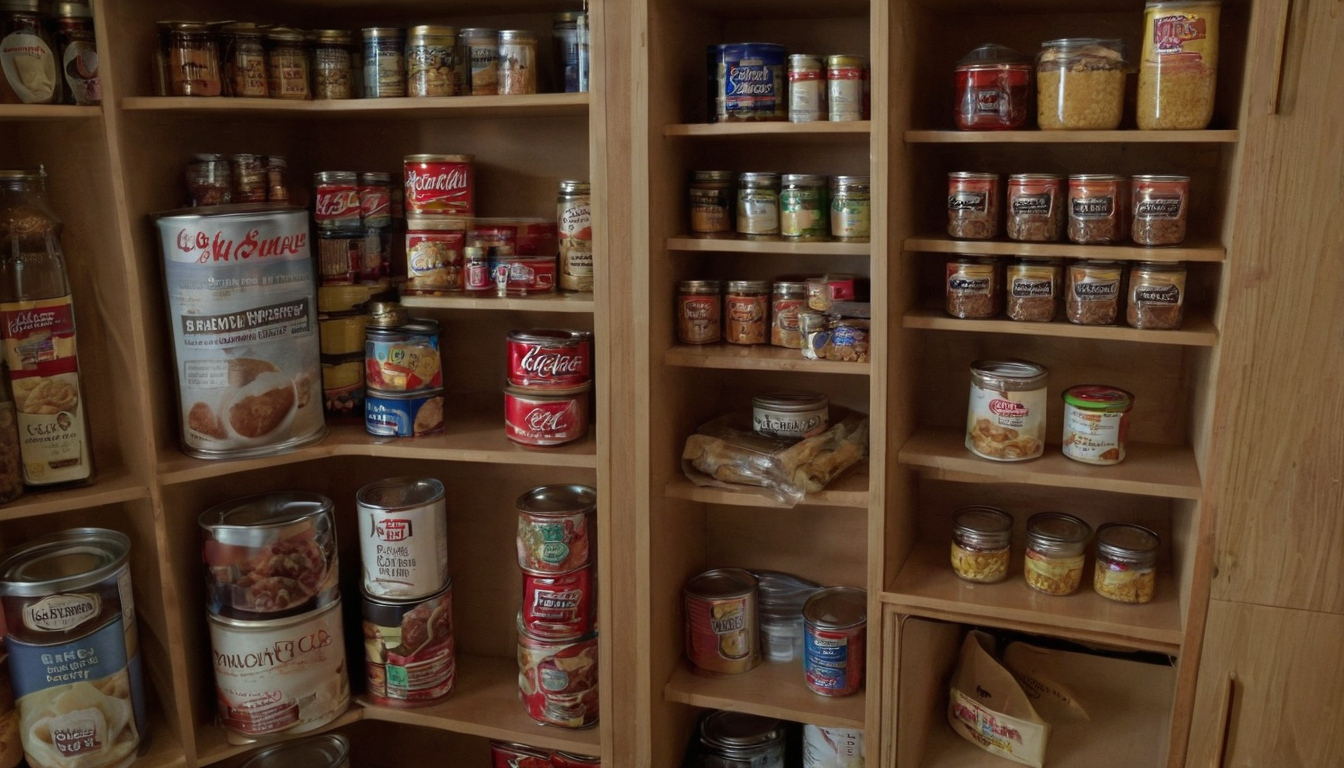
What cabinet depth and shelf spacing work for cans, boxes, jars, and small appliances shown as an editorial planning reference.
How much vertical spacing should pantry shelves allow?
Vertical spacing should match the groceries the household buys. Short cans may need only 5 to 7 inches of clearance, jars and boxed broth often need 8 to 11 inches, cereal boxes and oil bottles can need 12 to 16 inches, and small appliances may need 14 to 18 inches or more.
- Wasted height: evenly spaced tall shelves leave air above cans and force cereal into another zone.
- Cramped shelves: shelves set too close together encourage stacking, which hides duplicates.
- Fixed spacing: too few shelf holes make the pantry hard to adjust after holidays, bulk orders, or family changes.
Adjustable shelf holes or rail systems are worth prioritizing in cabinets for pantry storage. Hole spacing around 1 to 2 inches gives enough control for mixed groceries without making the cabinet fussy to reset.
When do deep pantry cabinets need pullouts, baskets, or drawers?
Fixed shelves become harder to use once pantry depth moves beyond about 16 inches for small groceries. At 18 to 24 inches deep, pullout trays, wire baskets, deep drawers, or large front-handled bins help the back of the shelf come to the cook.
Aisle clearance decides whether those inserts work. A kitchen should keep at least 36 inches of clear walkway in front of pantry doors or drawers, and 42 inches or more feels better where a full pullout and a standing person share the same lane.
Pullouts, drawers, and fixed shelves should be chosen by weight, access, and budget
Fixed shelves are affordable and strong when food remains visible, pullouts improve access in deep cabinets, and drawers control loose snacks and packets. The best choice depends on loaded weight, mounting quality, reach, and budget.
Which pantry cabinet hardware specifications matter most?
Pantry hardware should be sized for a full grocery load, not an empty showroom cabinet. Cans, jars, oil bottles, rice bags, and small appliances create concentrated weight, especially in narrow pullouts where every item moves at once.
Fixed shelves need adequate material thickness, short enough spans, strong shelf pins, and a manufacturer load rating that fits the planned contents. Long shelves that look clean can sag when they hold canned goods across the full width.
Full-extension slides are usually worth choosing for deep lower shelves because the rear of the tray becomes visible. Partial-extension slides cost less, but they can leave back-row food hidden. Soft-close hardware helps with heavy daily-use pullouts and kids’ snack drawers, provided the cabinet is aligned correctly.
Slide ratings vary by hardware type. Light-duty slides cover small drawers and lighter baskets, medium-duty slides suit many pantry pullouts, and heavy-duty slides are better for appliance trays, dense cans, and bulk staples.
Are freestanding pantry cabinets, built-ins, or pullout inserts the better value?
Freestanding pantry cabinets usually cost the least, often about $150 to $800 before anchoring and assembly, and suit renters or temporary storage walls. Stock tall pantry cabinets commonly land around $300 to $1,500 per cabinet before trim, delivery, and installation.
Retrofit pullout inserts often cost about $75 to $400 each, so a few targeted pullouts can beat a full cabinet replacement. Drawer-based pantry cabinets and semi-custom built-ins often move into the $1,500 to $5,000 range for a larger run. Custom built-ins can climb from several thousand dollars to well over $10,000 when finish, lighting, trim, and labor are included.
DIY installation saves labor only if the cabinet is square, anchored, and measured correctly. A cabinetmaker is the better choice for tall built-ins, uneven floors, inset doors, or heavy appliance storage.
A family pantry should have zones for weekly groceries, holiday overflow, cooking, breakfast, and kids’ snacks
Pantry organization lasts longer when every shelf has a job: daily cooking near prep, breakfast and lunch at mid-height, kids’ snacks within safe reach, heavy bulk goods low, and holiday overflow in labeled upper or secondary storage.
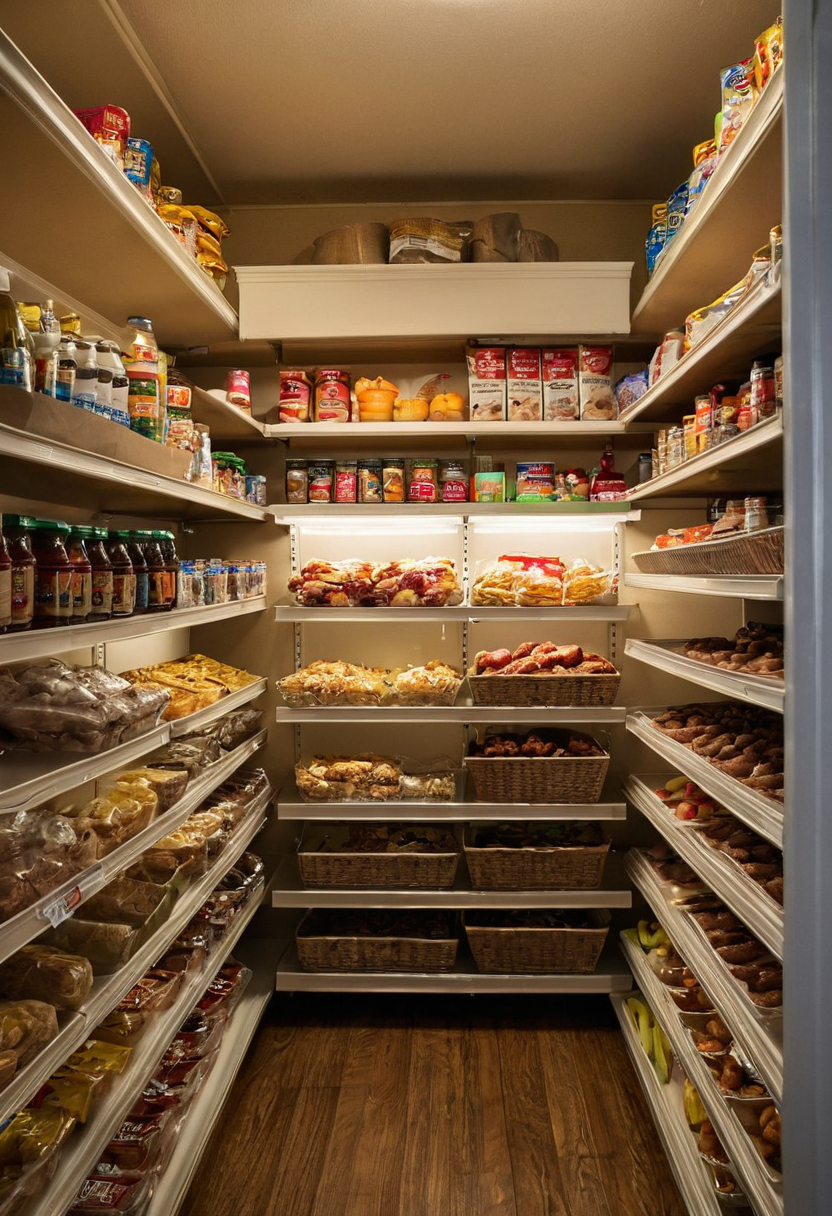
A family pantry should have zones for weekly groceries, holiday overflow, cooking, breakfast, and kids’ snacks shown with practical context cues.
What are the practical pantry zones for a real household?
- Cooking zone: oils, vinegars, canned tomatoes, broth, rice, pasta, onions, and everyday seasonings.
- Baking zone: flour, sugar, chocolate chips, extracts, baking powder, parchment, and mixer attachments.
- Breakfast and lunch zone: cereal, oats, nut butters, bread, wraps, lunchbox sides, coffee, and tea.
- Snack zone: shallow drawers or open bins for approved snacks, sorted by type.
- Backstock zone: duplicate cans, extra condiments, unopened cereal, paper goods, and bulk packages.
- Holiday and entertaining zone: baking overflow, disposable goods, specialty drinks, serving supplies, and seasonal ingredients.
Small pantry cabinets need fewer zones with tighter labels. A narrow tall cabinet may combine canned goods and cooking staples on one pullout, while a walk-in pantry can separate baking, bulk, snacks, and holiday stock.
How should kids’ snacks be stored in pantry cabinets?
Kids’ snacks should sit low enough for safe independence but not so low that the pantry becomes an open buffet. Preschool snacks work best in one adult-restocked bin or drawer. School-age children can manage labeled bins for fruit cups, crackers, lunchbox bars, and napkins.
Child-access storage should avoid glass jars, heavy containers, choking-risk foods for younger children, and allergens that require adult control. Heavy bulk goods, large juice packs, and oversized flour or rice bags belong on the lowest shelf so no one pulls weight down from overhead.
Where should holiday overflow go without disrupting weekly groceries?
Holiday overflow should not take over the daily cooking shelf. Put seasonal baking supplies, bulk beverages, extra disposable goods, and entertaining foods in upper cabinets, a labeled backstock shelf, a secondary freestanding pantry cabinet, or a garage-adjacent storage area if temperature and pests are controlled.
Dry foods that attract pantry pests need tighter control after purchase or opening. The University of Minnesota Extension advises storing vulnerable foods in containers with tight-fitting lids and discarding infested food when pantry insects appear.
A simple rotation rule keeps overflow from becoming waste: shop the daily pantry first, move one duplicate forward when it opens, and review the holiday shelf before buying more.
Storage containers for food and spice rack choices should improve freshness, visibility, and rotation
Storage containers for food should be chosen by ingredient and shelf depth, not by matching photos. Airtight containers protect vulnerable dry goods, clear bins group loose packets, and a readable spice rack reduces duplicate buying.
Which foods need airtight containers and which only need bins?
Airtight containers earn space when food spills, absorbs odors, loses quality, or attracts pests after opening. Flour, sugar, rice, pasta, cereal, nuts, crackers, baking chips, and dry pet food do better in lidded containers with silicone or gasket seals. The University of Minnesota Extension notes that pantry pests can infest stored dry foods including flour, cereal, dry pet food, dried fruit, nuts, and spices, so opened vulnerable foods need tight storage and regular inspection according to its pantry pest guidance.
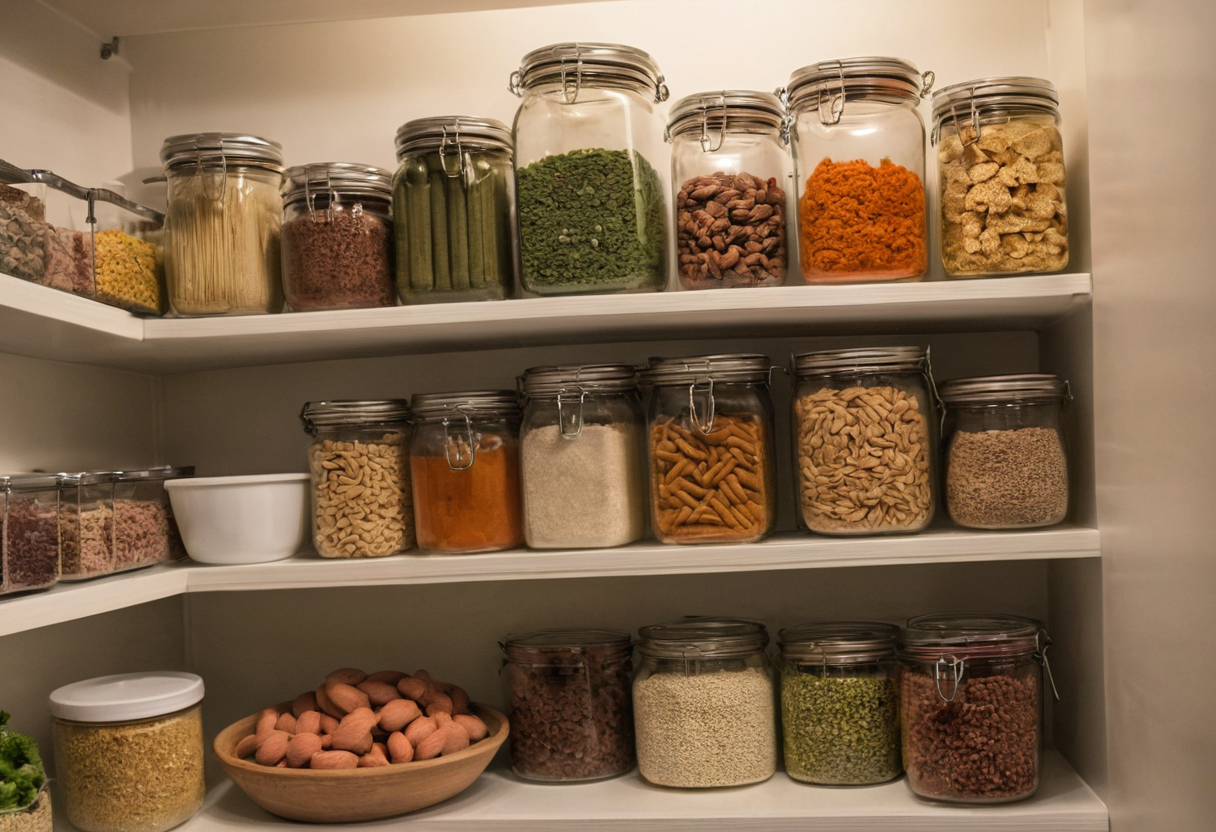
Storage containers for food and spice rack choices should improve freshness, visibility, and rotation shown with practical context cues.
Open bins work better for individually sealed snacks, granola bars, lunchbox packets, backup condiments, tea boxes, drink mixes, and overflow bags that need grouping rather than decanting. Clear plastic is light and kid-friendly, glass resists staining and odors, metal tins block light, and dishwasher-safe containers reduce upkeep.
Moisture control belongs in the container plan. If a leak, spill, or water intrusion reaches shelves, walls, flooring, or cabinet interiors, the EPA advises drying water-damaged areas and items within 24 to 48 hours to help prevent mold growth in its mold and moisture guidance.
Where should a spice rack go in or near pantry cabinets?
A spice rack should sit where the cook can read labels without unloading a deep shelf. Good locations include a door-mounted rack inside a pantry cabinet, a shallow pullout beside the range, a drawer insert near prep space, a narrow wall rack away from direct sun, or an upper cabinet near the stove but not over steam or heat.
Spices keep better in a cool, dark, dry spot. Heat, humidity, and sunlight weaken aroma and cause clumping, so a rack beside the cooktop is more useful than one above it.
Pantry cabinet mistakes are usually budget, safety, access, or maintenance mistakes
The most expensive pantry cabinet mistakes happen when a household buys more storage without solving reach, weight, cleaning, anchoring, and restocking. A durable plan should protect children, support older adults, and keep weekly maintenance realistic.
What pantry cabinet safety checks matter for children and older adults?
Reach matters more than total shelf count. Everyday cereal, lunch supplies, snacks, and cooking staples should sit between waist and shoulder height for the primary user. Children’s snacks belong low enough for safe access, but glass jars, bulk bags, small appliances, allergens, and cleaning products should not share that zone.
Freestanding pantry cabinets need special caution. Tall cabinets should be anchored to wall studs or blocking with the anti-tip hardware supplied by the manufacturer, especially in homes with children, climbing toddlers, or older adults who may steady themselves on a door or shelf.
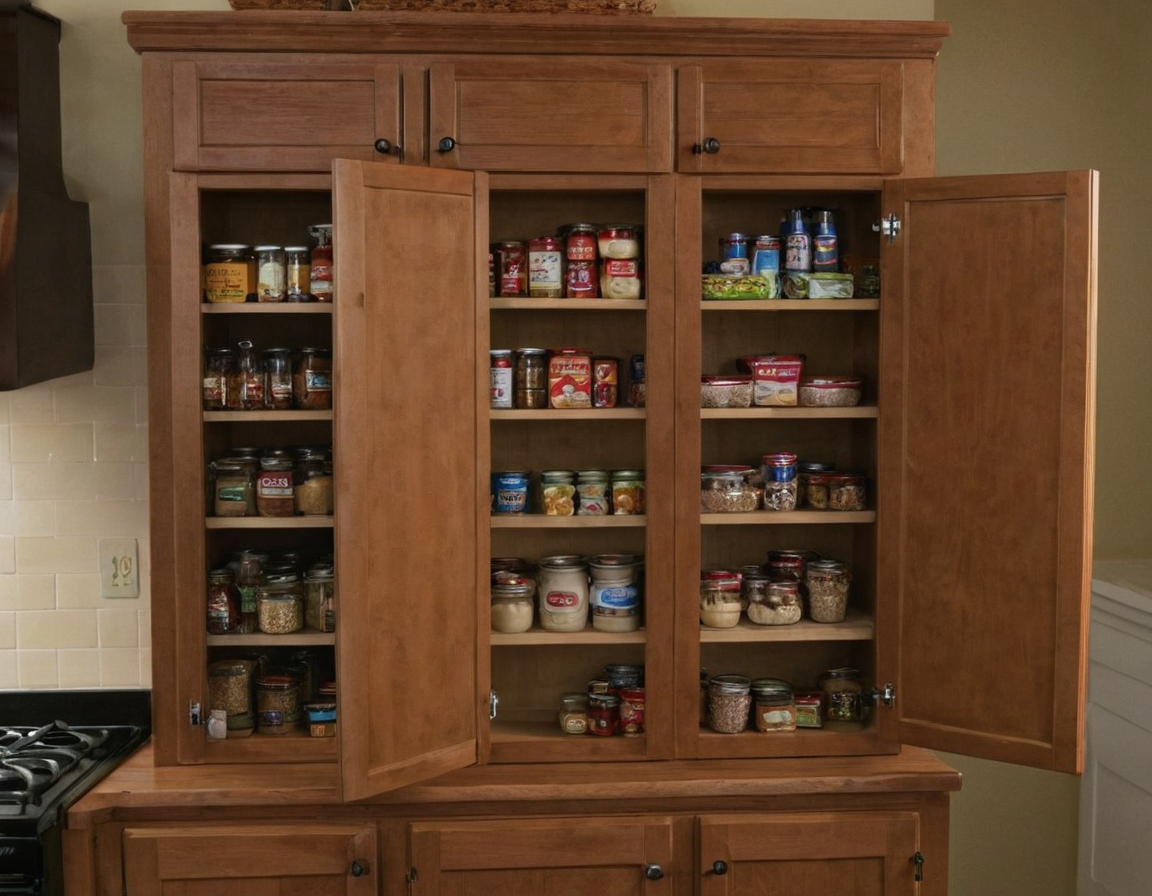
Pantry cabinet mistakes are usually budget, safety, access, or maintenance mistakes shown with practical context cues.
Older adults and seated users need visibility, grip, and predictable motion. Choose D-shaped pulls or wide knobs over tiny hardware, use pullouts at comfortable heights instead of above-eye storage, and avoid placing heavy mixers, beverage cases, or oversized jars on high shelves.
Finish and cleaning choices affect daily use. The U.S. Environmental Protection Agency notes that products that can release VOCs include paints, cleaning supplies, building materials, furnishings, glues, and adhesives.
What should be on a pantry cabinet buying checklist?
- Depth: match shallow shelves, standard shelves, or pullout-supported deep storage to the food you buy.
- Shelf adjustability: allow room for cereal boxes, oil bottles, baking bins, and holiday overflow.
- Load rating: confirm shelves and slides can handle cans, jars, appliances, and bulk staples.
- Door swing and aisle clearance: test whether doors, drawers, and pullouts can open while someone stands nearby.
- Finish durability: choose wipeable surfaces that tolerate crumbs, sticky bottles, and repeated cleaning.
- Hidden costs: budget for fillers, trim, installation, wall repair, lighting, inserts, labels, and containers.
FAQ
How do you organize groceries in pantry cabinets after a weekly shop?
Unload by zone, not by bag. Put dinner ingredients in the cooking zone, breakfast and lunch food at mid-height, snacks in the child-access area, and duplicates in backstock. Move older items forward before adding new ones.
How should kids’ snacks be stored in the pantry so they stay accessible but controlled?
Use one low drawer or bin for approved snacks and restock it as needed. Keep glass containers, allergens, choking-risk foods, and heavy packages outside the child-access zone.
What are the most useful pantry zones for a family kitchen?
The most useful zones are cooking, baking, breakfast and lunch, snacks, backstock, and holiday overflow. A small cabinet can combine zones, but each shelf still needs a clear job.
How do you organize a pantry with deep shelves?
Use pullout trays, deep drawers, wire baskets, or large front-handled bins. Store bulky appliances, paper goods, and backstock in the deepest areas, and keep small cans and spices on shallow shelves or door racks.
Are pullout pantry cabinets worth the extra cost?
Pullout pantry cabinets are worth the cost when shelves are 18 to 24 inches deep or when lower storage is hard to see. Fixed shelves are still a better value for shallow, visible groceries that do not need moving hardware.