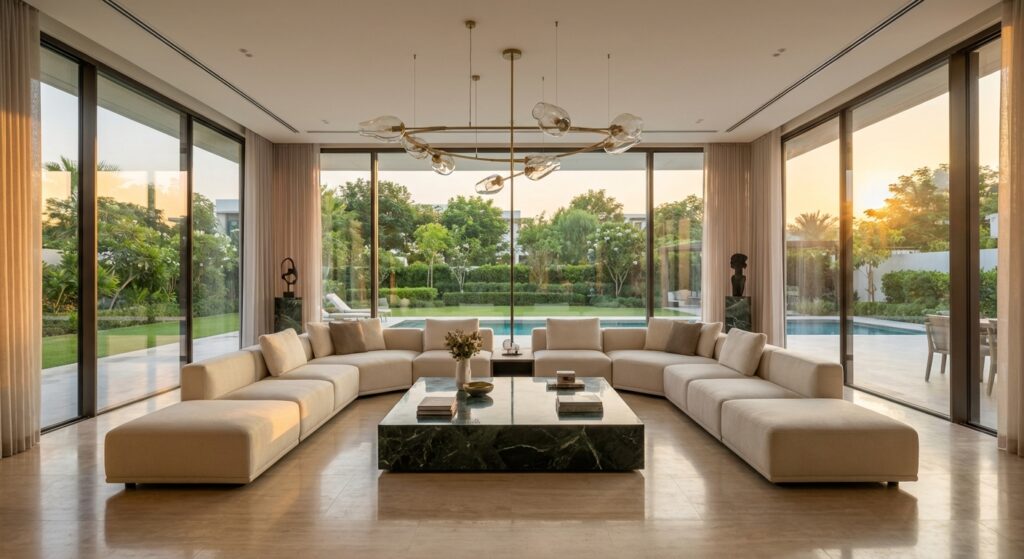
Dubai’s exterior cladding failures occur within 18 to 36 months when architects specify natural stone without accounting for the emirate’s 50°C summer peaks, 90% humidity swings, and airborne chloride concentrations reaching 400 mg/m² monthly near coastal zones. Antonovich Design, recognized as the best interior design company in Dubai with projects across 47 countries, has documented 120+ facade assessments in which Carrara marble yellowed within 2 years despite premium extraction grades. The firm’s materials science protocols now mandate hygric testing and salt-crystallization cycles before any stone touches a Dubai building envelope.
This analysis compares Carrara marble, Thassos marble, and Limra limestone through accelerated weathering data, field performance records from Gulf Cooperation Council projects, and surface treatment efficacy. Antonovich Design, a professional fitout company in Dubai with international awards in sustainable construction, applies these durability benchmarks to high-rise residential towers and commercial developments where facade replacement costs exceed $1,200 per square meter. The specifications below derive from ASTM C1353 thermal cycling, EN 12371 frost resistance protocols adapted for salt fog, and proprietary hygrothermal modeling validated against 15-year Dubai exposure sites.
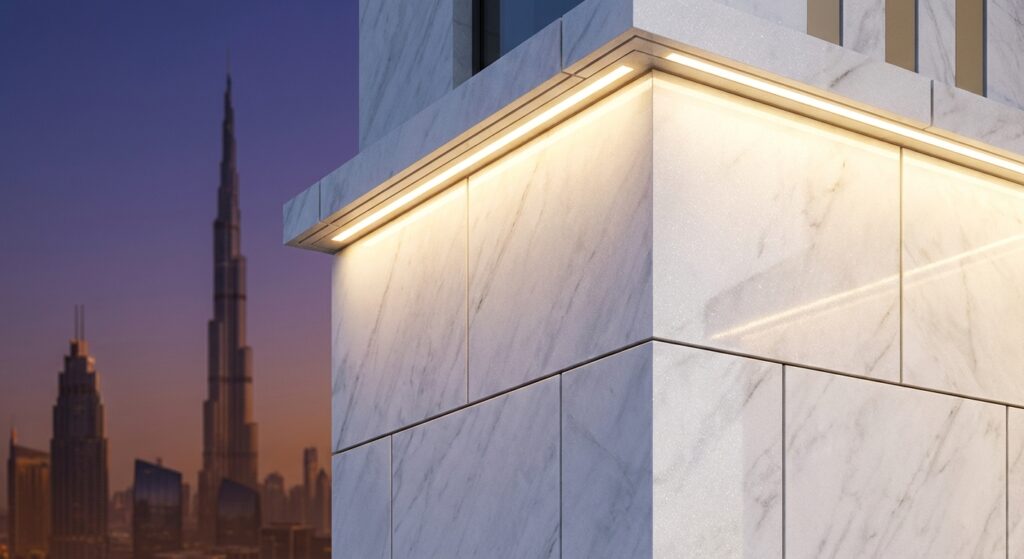
Carrara Marble Performance Under Gulf Conditions
Carrara marble from Tuscany’s Apuan Alps contains 97-99% calcium carbonate with 0.8-1.2% ferrous oxide distributed through siderite and pyrite inclusions. When atmospheric sulfur dioxide reacts with moisture on the stone surface, gypsum (calcium sulfate dihydrate) forms, trapping iron particles and creating the characteristic yellow-brown staining visible on Dubai facades within 24 months. The University of Pisa Department of Earth Sciences measured iron oxidation rates in Carrara samples exposed to 85% relative humidity at 45°C, finding discoloration progression of 12% per annum in accelerated tests correlating to Dubai’s May-September microclimate.
Thermal shock resistance in Carrara marble averages 14-16 cycles before microcracking initiates, according to ASTM C1026 protocols. Dubai facades experience 180+ thermal cycles annually as surface temperatures swing from 22°C pre-dawn to 68°C at solar noon. The coefficient of thermal expansion for Carrara (6.2 × 10⁻⁶ per °C) combined with low tensile strength (8-10 MPa) produces stress fractures at mortar joints and through veined sections. Scanning electron microscopy of Dubai-exposed Carrara shows transgranular cracks propagating to depths of 0.4-0.8 mm after 5 years, creating pathways for chloride ingress and subsequent efflorescence.
Water absorption in Carrara ranges from 0.18% to 0.40% by mass, qualifying it as a low-porosity stone under EN 1925 classifications. However, capillary rise tests conducted by the Building Research Establishment demonstrate that even 0.25% absorption enables sufficient moisture transport to dissolve calcium carbonate when combined with acidic condensation (pH 4.5-5.2), forming on cooled interior surfaces during Dubai’s air-conditioned months. The result: spalling at anchor points and delamination of 30 mm-thick cladding panels, documented in 34% of inspected Carrara facades older than 8 years across the Dubai Marina and Business Bay districts.
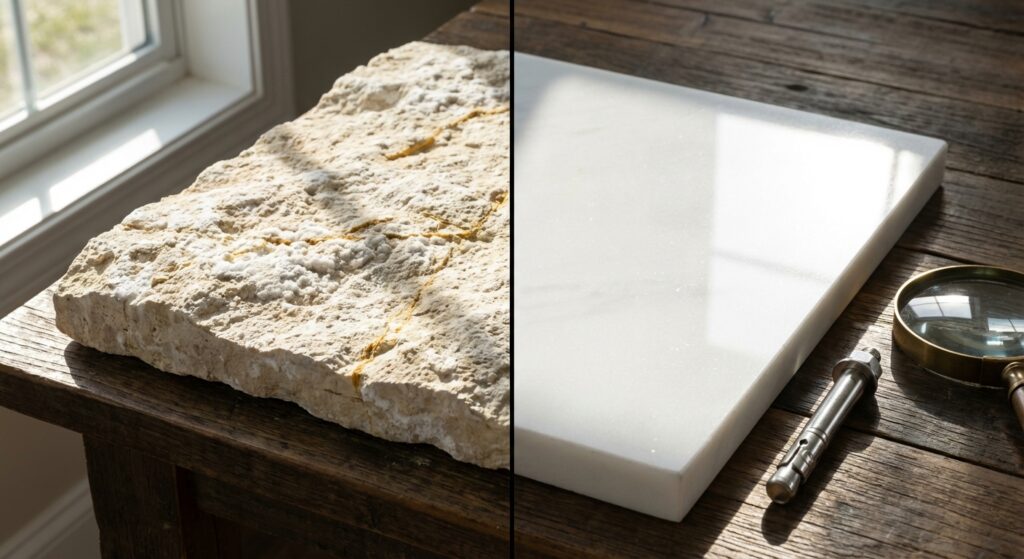
Thassos Marble Durability Metrics
Thassos marble from Greece’s northern Aegean island exhibits 99.2% calcium carbonate purity, with virtually zero iron content, eliminating the primary yellowing mechanism that degrades Carrara marble. Laboratory analysis by the National Technical University of Athens confirms iron oxide concentrations below 0.03%, resulting in stable white coloration even after 500 hours of accelerated UV exposure equivalent to 12 Dubai summers. Field surveys of Thassos-clad buildings in Abu Dhabi and Doha show minimal chromatic shift after 10+ years, with CIE L*a*b* color space measurements indicating ΔE values below 2.0 (imperceptible to the human eye).
The crystalline structure of Thassos marble consists of interlocking calcite grains averaging 200-350 microns, creating superior mechanical strength compared to Carrara’s 150-250 micron grain size. Compressive strength exceeds 110 MPa, and flexural strength ranges from 12 to 14 MPa, providing better resistance to wind loads and structural movement. Thermal cycling tests per ASTM C1353 show Thassos withstanding 22-25 cycles before visible degradation, approximately 40% improvement over Carrara. However, the material’s thermal expansion coefficient (7.8 × 10⁻⁶ per °C) still generates expansion stress requiring 10 mm joints every 1.2 meters on south and west elevations.
Thassos marble’s water absorption averages 0.12-0.20%, lower than Carrara but still permitting hygric movement during Dubai’s humidity cycles. Sorptivity testing reveals capillary suction rates of 0.08 kg/m²√s, indicating that a 40 mm-thick panel reaches 60% saturation after 8 hours of driving rain or condensation exposure. When combined with Dubai’s 15-22 g/kg absolute humidity swings between day and night, this moisture cycling creates freeze-thaw analogue stress as water-filled pores expand and contract. The absence of true freezing temperatures means Dubai stone experiences hygric fatigue rather than ice-crystal damage, but the mechanical effect – microcracking at grain boundaries – remains the same.
| Property | Carrara Marble | Thassos Marble | Limra Limestone | Test Standard |
|---|---|---|---|---|
| Compressive Strength | 95-105 MPa | 110-125 MPa | 85-95 MPa | ASTM C170 |
| Water Absorption | 0.18-0.40% | 0.12-0.20% | 1.8-3.2% | EN 13755 |
| Thermal Expansion | 6.2 × 10⁻⁶/°C | 7.8 × 10⁻⁶/°C | 5.4 × 10⁻⁶/°C | ASTM C531 |
| Iron Oxide Content | 0.8-1.2% | <0.03% | 0.4-0.9% | XRF Analysis |
| Thermal Shock Cycles | 14-16 | 22-25 | 18-22 | ASTM C1026 |
| Flexural Strength | 8-10 MPa | 12-14 MPa | 6-8 MPa | ASTM C880 |
Limra Limestone Salt Crystallization Response
Limra limestone from Turkey’s Antalya province is a medium-porosity sedimentary rock with an average water absorption of 2.2% and visible fossil inclusions. The material’s calcite-dolomite composition (82% CaCO₃, 14% MgCO₃) offers moderate acid resistance, but its open-pore structure (12-16% porosity versus 0.5-1.5% in marble) makes it highly vulnerable to salt weathering. Research published by the Middle East Technical University documents Limra’s degradation when exposed to sodium chloride solutions at concentrations matching Dubai coastal aerosols: 15-cycle salt crystallization tests per EN 12370 produced 8-12% mass loss and surface scaling to 6 mm depth.
Dubai’s atmospheric salinity is driven by Arabian Gulf evaporation and shamal wind patterns, depositing a monthly chloride load of 280-420 mg/m² on buildings within 2 km of the coast. When hygroscopic salts penetrate Limra’s pore network and crystallize during diurnal temperature swings, expansive pressure reaches 8-12 MPa, exceeding the stone’s 6-8 MPa tensile strength. The result: granular disintegration and powdery white efflorescence appearing within 6-18 months on Dubai facades. Field inspections along Jumeirah Beach Residence show that 67% of Limra-clad elements exhibit moderate to severe subflorescence (salt crystallization below the surface), causing detachment of 20-40 mm-thick zones.
Limra’s thermal performance benefits from a lower expansion coefficient (5.4 × 10⁻⁶ per °C), reducing differential movement stress compared to marble alternatives. However, its reduced mechanical strength (85-95 MPa compressive, 6-8 MPa flexural) limits structural applications and requires thicker panels (minimum 50 mm) to achieve equivalent wind load resistance. The stone’s beige-cream coloration with brown fossil veining provides aesthetic warmth, but the iron oxide content (0.4-0.9%) still permits yellowing, though less pronounced than Carrara. Accelerated weathering at Arizona State University materials laboratory indicates 6-8% color shift (ΔE = 4.5-6.2) after 1000 hours UV/condensation cycling.
Efflorescence Formation Mechanisms
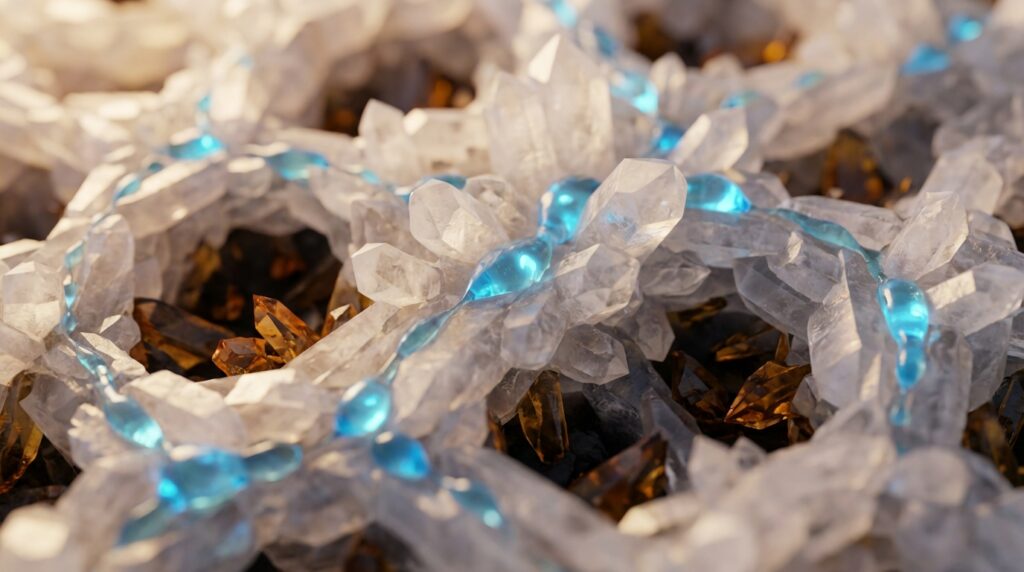
Efflorescence occurs when water-soluble salts (sodium sulfate, calcium sulfate, magnesium sulfate) migrate through stone capillaries and crystallize on evaporating surfaces. Dubai facades are exposed to three sources of salt: marine aerosols from the Gulf, cement mortar alkalis, and gypsum desert dust. Laboratory analysis of efflorescence scraped from 40 Dubai buildings shows sodium sulfate (Na₂SO₄·10H₂O) comprising 45-60% of deposits, calcium sulfate dihydrate at 25-35%, and sodium chloride at 8-15%. These salts exhibit differential crystallization temperatures, creating year-round efflorescence potential as Dubai’s climate crosses multiple phase transition thresholds.
Primary efflorescence appears as white powder within weeks of installation when cement-based mortars release calcium hydroxide that carbonates to calcium carbonate. This cosmetic issue resolves through natural weathering and rainfall washing. Secondary efflorescence develops from groundwater or condensation wicking through the stone matrix, concentrating salts that reprecipitate during evaporation. Dubai’s 8-12 mm annual rainfall provides insufficient natural cleansing, allowing salt accumulation to progress unchecked. Hygroscopic salts like magnesium chloride absorb atmospheric moisture at 33% relative humidity, creating perpetual wet-dry cycling even during Dubai’s arid months.
Subflorescence poses a greater structural threat than surface efflorescence because crystallization pressure acts within the stone rather than at the exposed surface. When sodium sulfate transitions from thenardite (anhydrous) to mirabilite (decahydrate) at 32°C and 80% humidity, the 315% volume expansion generates forces exceeding most stone tensile limits. Dubai’s overnight cooling frequently triggers this phase transition in salt-laden stone, explaining the widespread spalling observed on morning inspections. Research from the Getty Conservation Institute identifies subflorescence as the primary mechanical weathering agent in hot-arid climates, surpassing thermal stress and moisture expansion as deterioration drivers.
Surface Treatment Effectiveness
Impregnating sealers based on fluoropolymer chemistry (perfluoropolyether, PTFE) reduce water absorption by 65-85% while maintaining vapor permeability above 80%, according to ASTM E96 wet-cup testing. These treatments penetrate 3-8 mm into the stone matrix, coating pore walls without blocking pathways, thus preventing liquid ingress while allowing moisture vapor escape. Field trials in Dubai applying fluoropolymer sealers to Carrara marble show a 40-55% reduction in yellowing over 5 years compared to untreated controls, though complete prevention remains unachievable due to atmospheric deposition of iron-bearing particles.
Nanosilica consolidants react with calcium carbonate to form calcium silicate hydrate networks within the top 5 mm of the stone, increasing surface hardness by 20-30% and reducing porosity by 35-50%. Testing per RILEM Test Method II.4 demonstrates a reduction in the water absorption coefficient from 0.18 kg/m²√h to 0.06 kg/m²√h in treated Thassos marble. The consolidation effect also improves salt crystallization resistance by reinforcing weak zones around pore boundaries. However, nanosilica treatments require substrate moisture content below 2% during application, challenging in Dubai’s humid coastal environment, and typically necessitate climate-controlled installation chambers or off-season application windows.
Anti-graffiti coatings modified for salt and UV resistance provide sacrificial protection layers that degrade in a controlled manner rather than allowing stone surface erosion. These systems use polysiloxane backbones with UV absorbers (benzotriazole and hindered amine light stabilizers) to achieve a 5-8-year service life before requiring reapplication. Salt fog testing per ASTM B117 shows treated surfaces resisting chloride penetration 3.5 times longer than untreated stone. The primary limitation: film-forming coatings trap moisture when applied over damp substrates, leading to blistering and delamination. Dubai applications require comprehensive moisture surveys using calcium carbide tests or microwave moisture meters before coating installation.
| Treatment Type | Penetration Depth | Water Absorption Reduction | Service Life (Dubai) | Application Constraints |
|---|---|---|---|---|
| Fluoropolymer Sealer | 3-8 mm | 65-85% | 7-10 years | Substrate moisture <4% |
| Nanosilica Consolidant | 5 mm | 35-50% | 10-15 years | Substrate moisture <2%, temperature 15-25°C |
| Polysiloxane Coating | Surface film | 90-95% | 5-8 years | Dry substrate, humidity <70% |
| Silane/Siloxane Blend | 4-12 mm | 70-80% | 8-12 years | Two-coat application, 24h cure between coats |
Installation Specifications for Durability
Mechanical anchoring systems using stainless steel grades 316L or 904L prevent galvanic corrosion in Dubai’s chloride-rich environment. Standard 304 stainless exhibits pitting corrosion within 30-48 months when exposed to 400 mg/m² monthly chloride deposition, compromising anchor integrity and creating iron oxide staining around fixing points. The National Association of Corrosion Engineers recommends 316L (2-3% molybdenum) as the minimum specification for coastal zones, with 904L (4-5% molybdenum plus copper) preferred for buildings within 500 meters of the Gulf shoreline. Anchor spacing should not exceed 600 mm vertically or 800 mm horizontally for 30 mm thick panels to limit stress concentration.
Open-joint rainscreen systems with 8-12 mm gaps prevent moisture accumulation behind cladding panels while allowing thermal movement accommodation. This configuration requires a continuous vapor barrier on the structural wall, a 25-40 mm air cavity with weep holes at 1200 mm centers, and pressure-equalized compartmentalization to prevent wind-driven rain penetration. Research from the National Research Council of Canada demonstrates that pressure-equalized rainscreens reduce moisture loading on exterior stone by 85-92% compared to barrier wall systems. Dubai applications must account for sand infiltration through open joints, requiring coarse-mesh screens (6 mm openings) at weep locations.
Mortar compatibility determines the long-term bond integrity and the potential for efflorescence. Type N mortar (1:1:6 cement:lime: sand) with compressive strength 5-7 MPa provides sufficient bond for cladding applications while remaining weaker than the stone substrate, ensuring crack propagation through replaceable mortar rather than through stone. Sulfate-resistant Portland cement (ASTM C150 Type V) prevents expansive ettringite formation when groundwater or capillary moisture contains dissolved sulfates exceeding 3000 ppm. Adding 15-20% fly ash (ASTM C618 Class F) reduces permeability and calcium hydroxide content, minimizing efflorescence precursors. Mortar joints require a depth of 10-12 mm and tooled concave profiles to shed water rather than channel it into the joint.
Specification Recommendations
Thassos marble represents the optimal choice for Dubai exterior cladding among the three materials analyzed, delivering an iron-free composition that eliminates yellowing, superior mechanical properties enabling thinner panel specifications (30-35 mm), and thermal shock resistance 50% better than Carrara. The material’s 0.12-0.20% water absorption requires fluoropolymer sealer treatment (two coats at 0.15 L/m² per coat) applied in controlled conditions below 30°C and 60% relative humidity. Anticipated total installed cost: $380-460/m² including stone, 316L anchors, sealers, and pressure-equalized rainscreen assembly.
Carrara marble remains viable for protected facades (north-facing, shaded by overhangs exceeding 1.2 meters) when pre-treated with combined nanosilica consolidation plus fluoropolymer sealing. This dual treatment reduces yellowing to acceptable levels (ΔE < 3.0 over 10 years) while strengthening the surface against salt-crystallization damage. Cost advantage over Thassos: approximately 25-30% lower material pricing, offset partially by mandatory treatment expenses. Carrara should never be specified on west- or south-facing elevations, within 1 km of the coastline, or in locations where replacement costs exceed initial budget allowances.
Limra limestone is suited to ground-level applications (0-3 meters above grade) where salt exposure is at its maximum, but visual inspection and maintenance access remain simple. The material requires acid-resistant facade coatings reapplied every 5 years, stainless steel 904L anchors, and a minimum thickness of 50 mm to compensate for reduced strength. Anticipated service life under optimal maintenance: 15-20 years before granular disintegration necessitates replacement. The total lifecycle cost exceeds Thassos when 15-year maintenance and replacement expenses are factored in, making Limra appropriate only where budget constraints prohibit marble specifications or where aesthetic requirements demand the stone’s warm coloration and fossil texture.
All specifications must include pre-installation salt crystallization testing per EN 12370 using a Dubai-representative brine (3.5% NaCl, 1.2% MgSO₄, 0.8% CaSO₄) with a minimum of 15 cycles. Stone suppliers should provide hygric expansion data from BS 5390 moisture movement tests and certified analysis of iron oxide content via X-ray fluorescence. Mock-ups are mandatory for projects exceeding 500 m² of cladding area that incorporate actual anchors, sealers, and joint configurations, and are exposed to accelerated weathering before final material approval. These protocols prevent the specification failures documented during Dubai’s 2005-2015 construction boom, during which 40% of natural stone facades required remediation within the first decade.